
BSGH Granulator is a professional waste recycling machine manufacturing company that has been engaged in the field of waste recycling for more than 25 years. Our company not only adopts cutting-edge separation technology, but also has a excellent product system that can solve all your problems in the field of waste recycling.
Our company is located in Taizhou, Zhejiang Province, with a factory area of more than 60,000 square meters and more than 500 outstanding employees. It is one of the best waste recycling machine manufacturing companies in China. The machines of our company are very popular in China, occupying 70% of the Chinese market. Moreover, we have customers from all over the world, with a repurchase rate of over 60%.
High Quality
Our machine parts are made of high-quality materials during the production process. The blades of the machine's crusher are made of stainless steel blades that are wear-resistant, high toughness, and corrosion-resistant, ensuring that the machine does not need to replace the blades within one year.
Advanced Technology
The R&D department of our company has been developing and making breakthroughs in new technologies. Our latest double separation technology is used in various medium and large cable granulator machines. It can separate the copper wire more thoroughly and process your cables more efficiently and quickly.
Complete Service
Our company has a perfect service system. Whether it is understanding customer needs before sales, recommending the most suitable cable granulator machine to customers, or explaining installation methods and maintenance knowledge to customers after the machine is delivered, we have professional business personnel to serve you.
Market Validation
Our cable granulator machine has been produced and sold in China for more than 20 years. It has become the best-selling cable granulator machine in China, occupying 70% of the market. Our machines are reliable and high-quality machines that have been proven in the market. After purchasing the cable granulator machine, our customers can recover the machine cost and start making a profit in just one year at most.


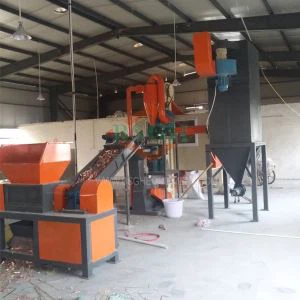


PCB recycling machine(Waste printed circuit board crushing and recycling production line) is mainly used for the separation of metal from non-metal in the waste circuit board, copper clad board, waste PCB breadboard and other material. The separation purity of the whole PCB recycling equipment is up to 98%. The production line takes two stages of recycling waste printed circuit boards, making them a mixture of metal and resin fiber powder, then the metal and the resin are separated by the wind separator and static electricity separator. In order to prevent dust pollution in the process of processing, the dust pollution problem is effectively solved by adding a pulse-jet bag filter dust collector. The development of waste PCB recycling production line not only improves the quality of copper recovery but also prevents secondary pollution.
Resource Recovery
PCBs are a made of valuable materials including copper, gold, silver, palladium, and various plastics. Traditional disposal methods like landfills or incineration result in the loss of these resources and contribute to pollution. However, circuit board recycling machine uses technologies such as mechanical crushing and physical separation to recycle these precious metals. This not only conserves natural resources by reducing the need for virgin material mining but also creates economic incentives as the recovered metals can be sold back into the market.
Economic benefits
The products of circuit board recycling machine are mixed metal and resin fiber. Generally speaking, most customers will choose to sell mixed metals directly. Because this way is convenient and profitable. The other is to extract precious metals through a precious metal purification process and sell them as raw materials for different metal products. The latter will be more profitable, but precious metal purification requires specialized equipment. Resin fibers can be sold to some factories, especially for processing resin powder, because the resin powder can be further ground into new products such as floor paint, heat insulation materials, and fireproof materials. But in some countries, resin fibers must be disposed of in landfills because resin powder is considered a hazardous waste in these countries.
Environmental Protection
The circuit board recycling machine adopts mechanical crushing and physical separation methods to process waste PCBs to obtain metal and resin fiber. Compared with chemical method, dry type physical method do not use chemicals and will not produce water pollution, so there is no need for additional costs to treat wastewater. For the presence of dust, circuit board recycling machine will be equipped with a pulse dust removal system to ensure a clean working environment.
Efficiency and Automation
The entire process includes shredding, crushing, eddy-vibrating screen, air separation and electrostatic separation with vacuum feeding and pulse dust collection. During PCBs recycling process, PCBs would be firstly shredded or crushed, then sieved by eddy-vibrating screen and separated through air separation and electrostatic separation, which could achieve the recovery rate to 99%. With the PLC control system, it could make the circuit board recycling machine fully automatic with stable performance, easy to operate.
Flexibility
The raw materials that the circuit board recycling machine can process include computer boards, TV boards, printed circuit boards, copper-clad boards, various waste circuit boards and other waste materials. Given the diversity of PCB designs and compositions across different electronic products, the circuit board recycling machine is designed with flexibility in mind. It can handle a wide range of PCB sizes, thicknesses, and material combinations, ensuring a broad applicability across the electronics waste recycling business.
Waste Reduction
Recycling PCB prevents them from ending up in landfills or being incinerated, which can release harmful toxins into the environment. By diverting PCB from waste streams, recycling machines help reduce the volume of electronic waste and minimize environmental pollution.
Hazardous Material Management
PCB often contain hazardous substances such as lead, mercury, and brominated flame retardants. Recycling machines safely extract and handle these materials, minimizing the risk of environmental contamination and human exposure to toxic substances.
Energy Conservation
Recycling PCB consumes significantly less energy compared to mining and refining raw materials. By processing used PCB into valuable secondary resources, recycling machines contribute to energy savings and reduce greenhouse gas emissions associated with resource extraction and processing.
Circular Economy Promotion
PCB board recycling machines facilitate the transition towards a circular economy by closing the loop on material consumption. Recovered metals and other materials can be reintegrated into the manufacturing process, extending their lifespan and reducing the need for new materials.
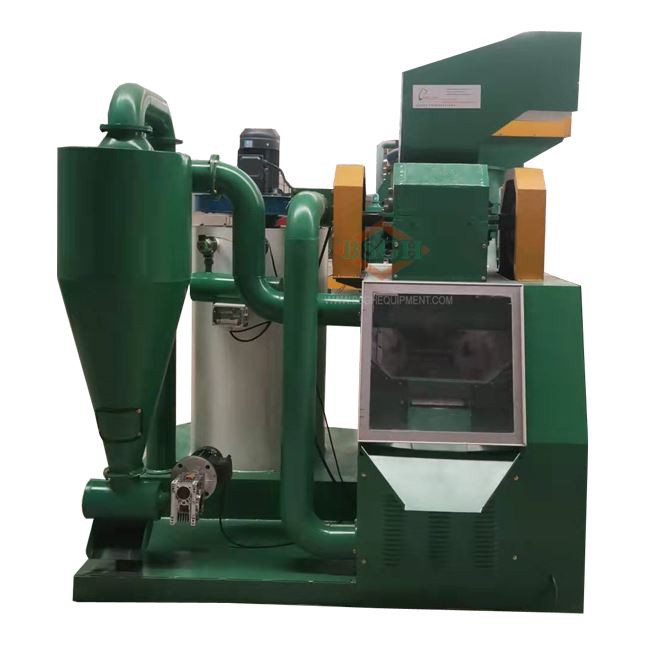
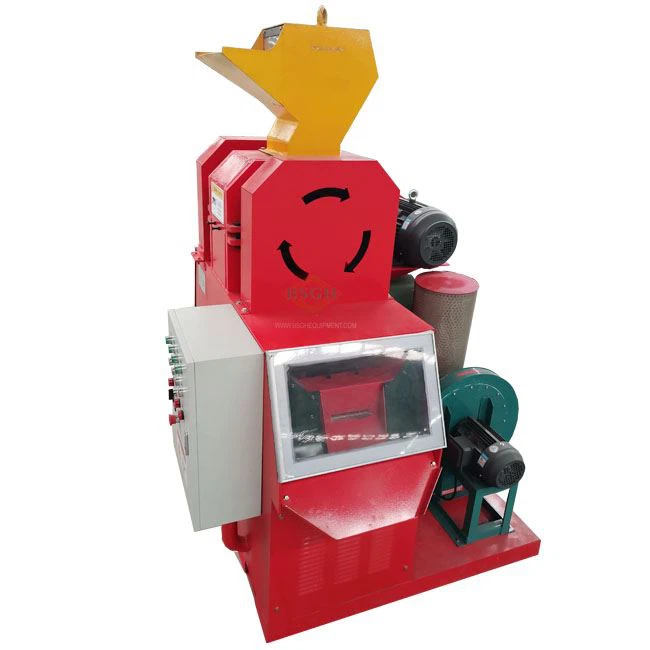


There are many metals, like copper, silver, tin, palladium, chrome, etc. inside waste circuit boards. PCB recycling machine is used to separate these precious metals from the waste circuit boards. Here is the working process of PCB recycling machine.
Shredding
The initial stage of the working process uses a double-shaft shredder. Shredder is tasked with reducing large or thick waste circuit boards into small fragments.
Crushing
Following the shredding phase, a hammerhead crusher and hammer crusher will be used to process the small fragments, to crush them into smaller particles. The hammer crusher is made of wear-resistant and highly durable 65Mn steel, which can effective crush waste circuit boards fragments.
Eddy-Vibrating Sieving
The crushed materials will enter an eddy-vibrating screen, which is used be to control the particle size. Fitted with a 26mesh screen, eddy-vibrating screen can prevent the oversized particles from entering the next step. The bigger particles will be returned to the hammer crusher for further processing until they successfully meet the required particle size criteria.
Air Separation
Subsequently, an air separator takes center stage in the process, exploiting the distinct gravity of metals and resin fibers. Through this advanced technique, crude metals are effectively segregated from the resinous component, achieving an impressive separation rate of approximately 98%.
Electrostatic Separation
Since some materials are completely broken, the gravity of some metals may be similar to that of resin fibers, and air separation cannot separate them clearly. Therefore, electrostatic separator is used to separate metals in resin fibers, according to their different conductivity. The separation rate can reach to 99%.
Electronic Components Dismantling
In pursuit of even higher metal purity, an electronic components dismantling machine can be used to remove the electronic components. Harnessing the unique property of metal tin, which melts at elevated temperatures, along with the frictional forces exerted on the circuit boards, this auxiliary equipment efficiently removes electronic components from the waste stream prior to the main recycling process.
Dust Collecting
Throughout the entire recycling operation, a cyclone and a pulse dust collector can collect the dust with the efficiency of 99.5%, ensuring a clean and safe working environment.
Electronic Components Dismantling Machine
The function of electronic components dismantling machine is to remove electronic components from waste PCBs. Electronic components dismantling machine adopts the principle of heating the solder at high temperature, and then uses the collision and friction between the PCBs to make the electronic components fall off quickly and cleanly.
Waste PCBs Recycling Equipment
Waste PCBs recycling equipment is a production line used for recycling waste PCBs, which includes shredder, crusher, eddy-vibrating screen, air separator and electrostatic separator. Through the mutual work of each part, precious metal mixture will be sorted out of scrap PCBs. Waste PCBs recycling equipment adopts a physical separation method for recycling waste PCBs, which won't produce any air or water pollution, and won't damage the quality of metal mixture. In addition, the configuration of the electrostatic separator can make the separation rate as high as 99%.
Description
The Printed Circuit Board Recycling Machine consists of shredding system, milling system, sorting system and dust collection system, and the whole process of circuit board recycling production line is controlled by PLC. It is an efficient and environmentally friendly method for processing printed circuit boards (PCBs). It can not only maximize the resource recovery rate and bring good profits, but also reduce environmental risks.
Processing Process
Electronic components dismantling: Usually, the first step of circuit board recycling is to separate the electronic components from the circuit boards by using PCB dismantling machine. Then you will get naked circuit mother boards, which will get further processing to get copper powder and resin powder.
PCB boards shredding and crushing: Circuit board shredder is the very first machine to size reduce circuit board. Its infeed opening should be big enough to process tons of circuit board at the same time. During shearing and crushing of 2 rotors, circuit boards are broken down into irregular pieces.
Separate the metal and non-metal powder: The shredded PCB will be separated by the air separator and the electrostatic separator. PCB recycling machine adopts dry type and physical crushing, separation and dedusting methods, which can keep no pollution to the environment. And the high pressure electrostatic separation combined with air separation process, which can purify approximately 99% metal powder.
Description
Electronic Components Dismantling Machines are used to disassemble electronic components from old, discarded circuit boards. The devices are manufactured using mechanical engineering and physical isolation technology. Metals can be separated efficiently and cleanly to produce copper, aluminum, tin, gold, silver, platinum and other precious metals. This greatly reduces crushing and separation operations and increases the reuse rate of valuable metals.
Features