
BSGH Granulator is a professional waste recycling machine manufacturing company that has been engaged in the field of waste recycling for more than 25 years. Our company not only adopts cutting-edge separation technology, but also has a excellent product system that can solve all your problems in the field of waste recycling.
Our company is located in Taizhou, Zhejiang Province, with a factory area of more than 60,000 square meters and more than 500 outstanding employees. It is one of the best waste recycling machine manufacturing companies in China. The machines of our company are very popular in China, occupying 70% of the Chinese market. Moreover, we have customers from all over the world, with a repurchase rate of over 60%.
High Quality
Our machine parts are made of high-quality materials during the production process. The blades of the machine's crusher are made of stainless steel blades that are wear-resistant, high toughness, and corrosion-resistant, ensuring that the machine does not need to replace the blades within one year.
Advanced Technology
The R&D department of our company has been developing and making breakthroughs in new technologies. Our latest double separation technology is used in various medium and large cable granulator machines. It can separate the copper wire more thoroughly and process your cables more efficiently and quickly.
Complete Service
Our company has a perfect service system. Whether it is understanding customer needs before sales, recommending the most suitable cable granulator machine to customers, or explaining installation methods and maintenance knowledge to customers after the machine is delivered, we have professional business personnel to serve you.
Market Validation
Our cable granulator machine has been produced and sold in China for more than 20 years. It has become the best-selling cable granulator machine in China, occupying 70% of the market. Our machines are reliable and high-quality machines that have been proven in the market. After purchasing the cable granulator machine, our customers can recover the machine cost and start making a profit in just one year at most.


What Is Tire Recycling Machine?
A tire recycling machine is a device that separates rubber from steel/metal for reusability in other industries. It is designed to process discarded tires into usable materials such as rubber crumb, steel, and synthetic fibers.
Waste Reduction
Tire recycling machines significantly reduce the volume of waste tires, preventing them from ending up in landfills. This helps mitigate environmental pollution and conserves landfill space.
Economic Benefits
The recycling industry creates jobs and stimulates economic growth. Recycled rubber products, such as rubberized asphalt and playground surfaces, have a growing market demand, providing opportunities for businesses.
Resource Conservation
Recycling tires conserves natural resources by repurposing used rubber. The recycled rubber can be used in various applications, reducing the need for virgin materials.
Energy Savings
Recycling tires uses less energy compared to producing new rubber from raw materials. This leads to lower carbon emissions and a reduced environmental footprint.
Tire recycling machines serve several critical functions in the recycling process. Their primary role is to break down whole tires into smaller, manageable pieces that can be further processed or repurposed.
Mechanical Shredding
This method involves shredding tires into smaller pieces using specialized equipment. The resulting tire chips or shreds can be further processed or used as a raw material in various applications.
Ambient Grinding
Ambient grinding utilizes ambient temperature to reduce tires into granules or crumb rubber. The process involves cutting or grinding tires into small particles, typically ranging from a few millimetres to a few centimetres in size.
Cryogenic Grinding
In cryogenic grinding, tires are frozen using liquid nitrogen or a similar cryogenic substance. The frozen tires become brittle, allowing them to be easily shattered into small particles. Cryogenic grinding is often used to produce fine rubber powders.
Pyrolysis
Pyrolysis involves heating tires in the absence of oxygen at high temperatures, typically around 400 to 600 degrees Celsius. This thermal decomposition process breaks down the tires into various byproducts, including liquid oil, gas, and carbon black. These byproducts can be further refined and used in the production of fuels, chemicals, or other materials.
Devulcanization
Devulcanization is a process that aims to break the cross-links in vulcanized rubber to restore its elastic properties. It allows for the reclamation of rubber from tires, which can then be used to produce new rubber products.
Tire Shredder
Tire shredders are a type of recycling equipment used to reduce the volume of tires to scrap using high torque shredding systems. The various types of tire shredders are capable of handling large loads of tires of different sizes. They are a form of size reduction technology that cuts, slices, and crushes end of life tires (ELTs) into rubber chips. Tire shredding is a very popular method for recycling, reprocessing, and transforming waste tires into usable products.
Tire Pyrolysis Plant
A tire pyrolysis plant is a specialized facility that converts waste tires, along with other solid waste materials such as plastics, into valuable products such as oil, carbon black, and uncondensed gas through the process of pyrolysis. By utilizing waste tires as raw materials in a pyrolysis plant, it becomes possible to recycle the waste, thus helping to safeguard the environment by reducing waste accumulation. Moreover, investors can generate substantial profits by selling the by-products derived from the pyrolysis process.
Tire Bead Extractor
A Tire Bead Extractor is a a specialized tool designed for separating the tire bead from the rim efficiently by breaking the seal between them. It applies force directly to the tire bead, allowing for easier tire removal and installation. Tire Bead Extractors come in various designs, suitable for different types of tires.
Rubber Cracker Mill
A Rubber Cracker Mill is primarily designed to break down rubber materials into smaller pieces, often called “crumb rubber.” It applies high shear and compression forces to rubber compounds, breaking them into smaller particles or sheets. The Rubber Cracker Mills work by passing the rubber material between rotating corrugated steel drums, reducing the rubber to various sizes. Rubber Cracker Mills are grading according to the fineness of the rubber crumbs they produce.


In recent years, tire recycling technology has witnessed significant advancements, ushering in a new era of sustainable waste management. Innovations in machinery and processes have revolutionized the tire recycling industry, paving the way for more efficient and eco-friendly solutions.
Research and Development
The continuous research and development efforts in tire recycling machine have resulted in cutting-edge technologies that enhance the effectiveness of tire recycling processes. Manufacturers and researchers have focused on improving the overall efficiency of tire recycling machines, leading to higher throughput and better-quality output.
Innovations in Tire Recycling Processes
Innovative tire recycling processes have emerged as key drivers of sustainability in the tire waste management sector. The introduction of tire pyrolysis plants, for instance, has transformed the landscape by converting used tires into valuable products like pyrolysis oil, carbon black, and steel. This process minimizes environmental impact and presents a lucrative opportunity to utilize valuable by-products.
Energy-Efficient and Eco-Friendly Designs
Sustainability is at the core of modern tire recycling machines, focusing on energy efficiency and reducing environmental footprints. Manufacturers have incorporated energy-saving features, optimizing resource utilization throughout the recycling process. As a result, tire recycling has become more environmentally friendly, aligning with global efforts to combat climate change.
Integration of Automation And AI
The integration of automation and artificial intelligence (AI) has ushered in a new era of tire recycling efficiency. Automated sorting systems ensure the precise separation of various tire components, streamlining the recycling process. Additionally, AI-driven algorithms optimize machine operations, maximizing productivity and resource efficiency while minimizing errors.
Description
The Tire Rim Separator is a wheel separator machine which makes the task of separating the two main parts of a road wheel; the steel or alloy rim, and the rubber tire as effortless as possible. Each of these tire components are hugely valuable in its separate form, for recycling purposes and for profitability.
How does the Tire Rim Separator work?
The Tire Rim Separator is very easy to use and designed to keep the operator as safe as possible.
Description
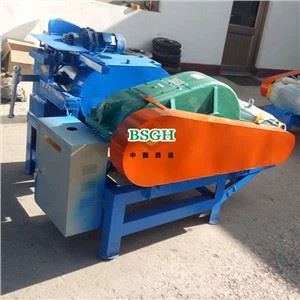
The tire strip cutter is used to cut tires into strips, and the width of the strips is adjustable. The tire strip cutting machine consists of a pair of blades, a reducer, a frame and a transmission mechanism. The reducer drives the two blades to rotate at a relatively uniform speed through the rotating mechanism, prompting the two blades to form a shearing force, placing the tire between the two blades and moving forward to achieve a shearing effect.
Benefits