
BSGH Granulator is a professional waste recycling machine manufacturing company that has been engaged in the field of waste recycling for more than 25 years. Our company not only adopts cutting-edge separation technology, but also has a excellent product system that can solve all your problems in the field of waste recycling.
Our company is located in Taizhou, Zhejiang Province, with a factory area of more than 60,000 square meters and more than 500 outstanding employees. It is one of the best waste recycling machine manufacturing companies in China. The machines of our company are very popular in China, occupying 70% of the Chinese market. Moreover, we have customers from all over the world, with a repurchase rate of over 60%.
High Quality
Our machine parts are made of high-quality materials during the production process. The blades of the machine's crusher are made of stainless steel blades that are wear-resistant, high toughness, and corrosion-resistant, ensuring that the machine does not need to replace the blades within one year.
Advanced Technology
The R&D department of our company has been developing and making breakthroughs in new technologies. Our latest double separation technology is used in various medium and large cable granulator machines. It can separate the copper wire more thoroughly and process your cables more efficiently and quickly.
Complete Service
Our company has a perfect service system. Whether it is understanding customer needs before sales, recommending the most suitable cable granulator machine to customers, or explaining installation methods and maintenance knowledge to customers after the machine is delivered, we have professional business personnel to serve you.
Market Validation
Our cable granulator machine has been produced and sold in China for more than 20 years. It has become the best-selling cable granulator machine in China, occupying 70% of the market. Our machines are reliable and high-quality machines that have been proven in the market. After purchasing the cable granulator machine, our customers can recover the machine cost and start making a profit in just one year at most.
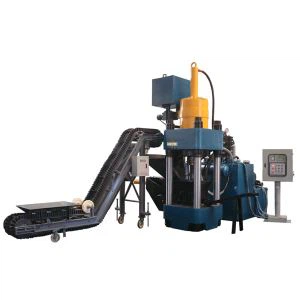
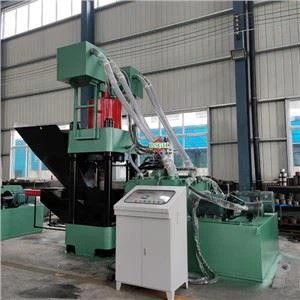

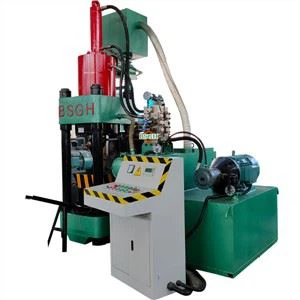

A Hydraulic Briquetting Machine is used to turn the waste fine/powder into a regular shape block, which can help to improve the physical or chemical conditions for those powder, make it easy for transportation, storage, reduce the generated dust and be more useful for further applications. The briquette system is able to deal with all kinds of materials under suitable sizes and moisture. Briquetting work always takes place with the binder as the raw particles need the binding effect to get enough strength when they are turned to briquette, whatever it’s internal or extra additives.
High-Pressure Capabilities
Hydraulic briquette machines can apply high pressure during the briquetting process, resulting in dense and solid briquettes. This makes them suitable for applications that require briquettes with high density and strength.
Consistent and Uniform Briquette Production
The hydraulic system ensures consistent pressure throughout the entire production process. This leads to the production of briquettes with uniform density and size, which is important for applications that require consistent burning and heat generation.
Versatility in Material Processing
Hydraulic briquette machines can process biomass materials with varying moisture levels, making them suitable for a wide range of raw materials. This versatility allows for the utilization of various agricultural residues and biomass waste.
Lower Energy Consumption
Hydraulic briquette machines are designed to consume less energy compared to other types of machines. The hydraulic system operates efficiently, reducing energy waste and lowering production costs in the long run.
Easy Operation and Automation
Hydraulic briquette machines are generally easy to operate and require minimal manual intervention. The process of feeding the raw materials and removing the finished briquettes can be automated, increasing production efficiency and reducing labor requirements.
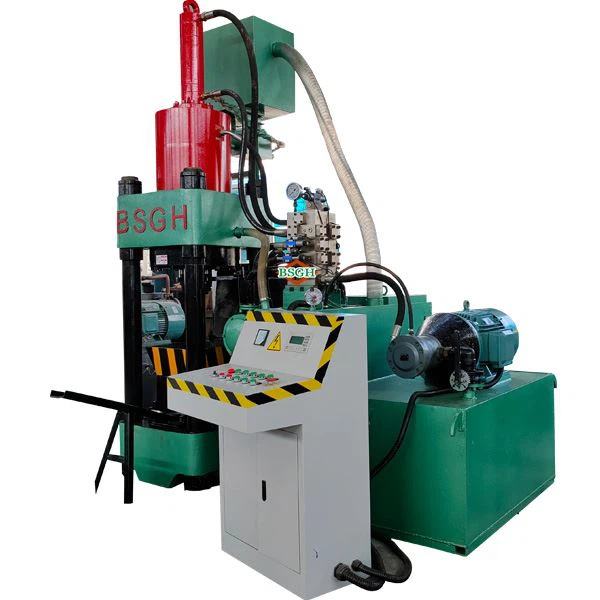
Main Machine
Composed of the frame, main hydraulic cylinder, pusher hydraulic cylinder, bottom plate hydraulic cylinder, matching mold frame and molds, press head, etc.
The frame consists of upper and lower beams and columns. Both the upper and lower beams are made of cast steel, connected by four columns with inner and outer nuts, bearing the tension during operation. The main hydraulic cylinder avoids using cast steel to eliminate safety hazards, ensuring the equipment’s lifespan and operational safety. The matching mold frame and molds, along with the press head, are professionally designed and manufactured with superior processing capabilities, guaranteeing the equipment’s excellent quality. The molds and briquetting machine’s punch are equipped with high-strength, wear-resistant steel that can be quickly replaced. Relevant parts are specially hardened or forged where necessary.
Hydraulic Station
Composed of motor, hydraulic pump, pump protection device, professional control valve block, and piping system connected to the briquetting machine.
The design is reasonable and the quality is stable. Can be equipped with a cooling system (optional) to prevent the equipment from being unable to work continuously due to overheating oil temperatures.
Control System
Composed of electrical control cabinet along with PLC control.
Equipped with adjustable text display, the action sequence and the duration of each action are entirely controlled by the PLC system, which can be adjusted by the operator at any time, making it convenient, quick, and easy to understand.


Understanding the Hydraulic Briquetting Machine
Before delving into safety measures, it is crucial to understand the basic components and functions of a Hydraulic Briquetting Machine. These machines use a hydraulic cylinder to generate compressive force. The press comprises several key parts, including the frame, hydraulic cylinder, control system, and a bed where the material is placed. Various types of Hydraulic Briquetting Machines exist, such as C-frame, H-frame, and four-column presses, each designed for specific applications.
Pre-Operation Safety Measures
Training and Certification: Proper training is the foundation of safe operation. Operators should undergo rigorous training programs to understand the mechanics of Hydraulic Briquetting Machines, safety protocols, and emergency procedures. Certification ensures that the operator is competent and knowledgeable.
Pre-Use Inspection: Conducting a thorough inspection before each use is essential. Check for visible damages or wear, ensure all safety guards and devices are in place, and verify that the machine is in good working condition. This step can prevent accidents caused by mechanical failures.
User Manual: Familiarize yourself with the user manual provided by the manufacturer. It contains vital information on the machine’s capabilities, operating procedures, and safety features.
Personal Protective Equipment (PPE)
Safety Glasses or Face Shields: Protect your eyes from flying debris and splashes by wearing appropriate eye protection.
Gloves: Wear gloves to protect your hands from sharp edges and hot materials. Ensure the gloves fit properly and do not interfere with your dexterity.
Steel-Toed Boots: Foot protection is crucial when handling heavy materials. Steel-toed boots can prevent injuries from falling objects.
Hearing Protection: Hydraulic Briquetting Machines can generate significant noise. Use earplugs or earmuffs to protect your hearing, especially during prolonged exposure.
Safe Operating Procedures
Work Area Setup: Maintain a clean and organized workspace to prevent tripping hazards and ensure easy access to tools. Adequate lighting is essential for clear visibility.
Material Handling: Properly position and secure materials before starting the Hydraulic Briquetting Machine. Use appropriate tools and attachments designed for the specific task. Never use makeshift tools or methods.
Focus and Attention: Avoid distractions while operating the Hydraulic Briquetting Machine. Stay focused on the task at hand and be aware of your surroundings. Distractions can lead to mistakes and accidents.
Following Guidelines: Adhere to the operational guidelines provided by the manufacturer. Do not exceed the machine’s capacity or use it for unintended purposes. Overloading the Hydraulic Briquetting Machine can cause damage and increase the risk of accidents.
Emergency Procedures
Emergency Stops and Controls: Familiarize yourself with the location and operation of emergency stops and controls. In case of an emergency, you should be able to shut down the machine quickly to prevent further damage or injury.
Responding to Malfunctions: If the Hydraulic Briquetting Machine malfunctions, stop it immediately. Do not attempt to fix the problem while the machine is running. Report the issue to a supervisor and document the incident.
First Aid Measures: Be prepared to administer first aid in case of an injury. Keep a well-stocked first aid kit nearby and ensure all operators are trained in basic first aid.
Regular Maintenance and Inspection
Routine Maintenance: Regular maintenance is vital to keep the machine in optimal condition. Follow the maintenance schedule provided by the manufacturer, which typically includes checking hydraulic fluid levels, inspecting hoses and connections, and testing safety devices.
Scheduled Inspections: Conduct regular inspections to identify potential issues before they become serious problems. Look for signs of wear and tear, leaks, and other anomalies. Address any concerns immediately to prevent accidents.
Common Mistakes to Avoid
Bypassing Safety Mechanisms: Never bypass or disable safety mechanisms, such as guards and emergency stops. These features are in place to protect you and should always be operational.
Using the Machine Improperly: Do not use the Hydraulic Briquetting Machine for tasks it was not designed for. Each Hydraulic Briquetting Machine has specific capabilities and limitations. Using the machine beyond its intended purpose can lead to damage and accidents.
Overloading the Machine: Respect the machine’s capacity limits. Overloading can cause mechanical failures and pose serious safety risks. Always follow the manufacturer’s guidelines for maximum load capacity.
Under this condition, one of the reasons is the temperature or the water content in the raw material is out of normal range, and the corresponding solution is drying materials by the dryer to ensure that the materials are kept at proper temperature and humidity. Another reason is that there are damages with the parts of the Hydraulic Briquetting Machine, such as the screw conveyor is worn seriously. When it happens, the parts of the briquette machine should be replaced immediately.
Repeat restart of the Hydraulic Briquetting Machine is usually caused by the low power supply, which can not drive the Hydraulic Briquetting Machine to work normally. To solve this problem, it would better suit the remedy to the case. First, the power supply voltage of the Hydraulic Briquetting Machine is detected by AVO meter, and it'd better detect under the condition that the Hydraulic Briquetting Machine is loaded so that to judge whether there is any power supply problem. What is particularly noteworthy is that the consumed power of the outer Hydraulic Briquetting Machine is quite different when the heater is on or off. It must be paid attention to the maximum power of the Hydraulic Briquetting Machine to ensure that the Hydraulic Briquetting Machine can work normally with enough power supply. In addition, when the Hydraulic Briquetting Machine works normally, the power voltage would better be no less than the standard voltage. When the standard voltage is at the value of 24VAC, the voltage fluctuation should be no more than 25%.
There is insufficient oil pressure during the running process of the Hydraulic Briquetting Machine. The reason causing such a problem may be the blockage of oil suction or the deformation of the joint gasket. If the oil suction is blocked, it should be cleaned and washed immediately to ensure the cleanness of Hydraulic Briquetting Machine equipment; if the joint gasket is deformed, it should be replaced the deformed gasket with a new one, so that the Hydraulic Briquetting Machine can work normally and efficiently.
During the installation of the Hydraulic Briquetting Machine, the suspension installation method is adopted by several users, but there is still a gap between the Hydraulic Briquetting Machine and the bracket hinge. When it is raining or snowing, the water may permeate into the Hydraulic Briquetting Machine to cause damage. Therefore, the waterproofing measure should be adopted during installation. Also, the bracket is quite important, and it is recommended to adopt the original bracket. The original bracket is fully considered the water-proofing problem, such as the inclination is designed to lift the screw end of the Hydraulic Briquetting Machine, preventing the back-flow of water.
Aim at this problem, there are several steps to adjust the dislocation: First, the driven gear should be found, because there is set an adjusting panel. Second, loose all the screws on the adjusting plate, so that to make the panel adjustable. Third, measure the dislocation gap between two sockets, adjust the gap to set the sockets in a proper position.
When there is a dislocation between sockets, except the adjustment of sockets by scientific methods, there still should be paid attention to the shaft. Therefore, the shaft should be checked whether there is any damage.
If there produces much dust during the briquetting process, the cyclone dust collector can be equipped as the corollary equipment. The dust collector has the advantage of cleaning the dust in the machine immediately and improving the working efficiency greatly. The cyclone dust collector is simple in structure, durable in service. Under normal conditions, the cyclone dust collector can collect the dust of more than 5 μm, and the separating ratio is more than 90%.